Ultrabericus 2025
tune-up | 65km 2.500md+ 6h20m52s

A brutal trail, a 65k cross-country. I see the sign for Volpiano and a light bulb goes on in my head. That’s exactly how I’d define yesterday’s Ultrabericus: a 65k cross. Intense, muddy, muscular. Long. And beautiful.
We’re driving back home now, the evening light turning everything golden, heavy gray clouds finally breaking after a week of rain.
The sun, after so many wet days, feels like a blessing. The sun, after a day like yesterday, feels almost like a mockery.
The race starts at 10:00 a.m. Every time I think about it I can’t help but smile: it’s rare for me to sleep until 7:00, wake up unrushed, have breakfast, and get ready for the start line. Usually races kick off at dawn, or I’m far from home and need to move everything earlier.
Tune-up race
The purpose of a “get in the groove” race is to simulate race conditions: course profile, pace, nutrition and hydration strategies, gear choices, and all those little details that can give you a sense of how ready you are for the big day. Obviously, the main goal always comes first, and since these races can be brutal on both body and mind, it’s smart to push, but not to the point of draining yourself before the A-race (or worse, losing the hunger to compete).
For me, Ultrabericus was supposed to be the tune-up race for Tuscany Crossing 100k: relatively fast and runnable (at least compared to the more alpine terrain I’m used to) winding through backroads, dirt paths, singletracks, and villages scattered across the Colli Berici.
At 8:45 a.m. we step out of the house and jog gently through the rain toward the city center.
I feel sorry for Giulia. She’s the one who’ll have to wait for me, somewhere along the course, in the cold and wet.
I’m nervous. I want the start to come, but time seems frozen. It’s a good kind of nerves though — determined, a little dreamy. I know I’ve put in the work, I know I’m ready. I just want to run.
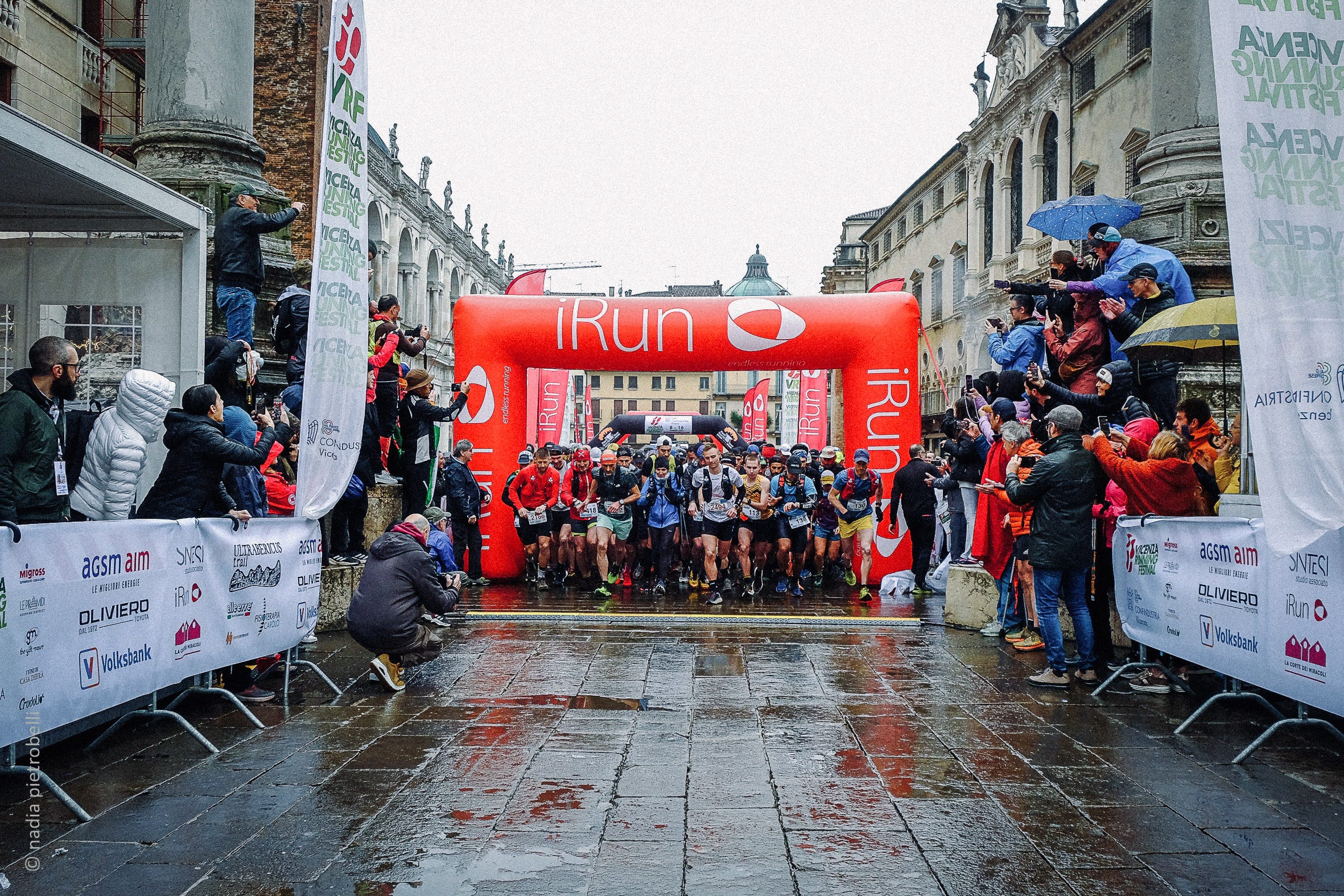
Little by little, Piazza dei Signori fills up with bright, rain-soaked shells, trail vests, muddy shoes, and strong legs. Some faces serious, others smiling. We’re ready for the rain. We’ve already made peace with the mud that’s waiting for us.
Target and strategy
I went in with the mindset of testing my prep and race-day strategy for Tuscany, but no doubt my B-goal was to put down a solid performance. I’d studied the course profile and sketched out a target pace based on past experience and the last training block. Compared to most of the trail races I’ve done over the years, the elevation gain-to-distance ratio here is on the lower side - but it’s practically identical to Tuscany Crossing: about 370 meters of vert per 10k (versus Tuscany’s 360).
That little formula — vert per kilometer — has been my compass in training, helping me design loops that would mimic the race effort as closely as possible.
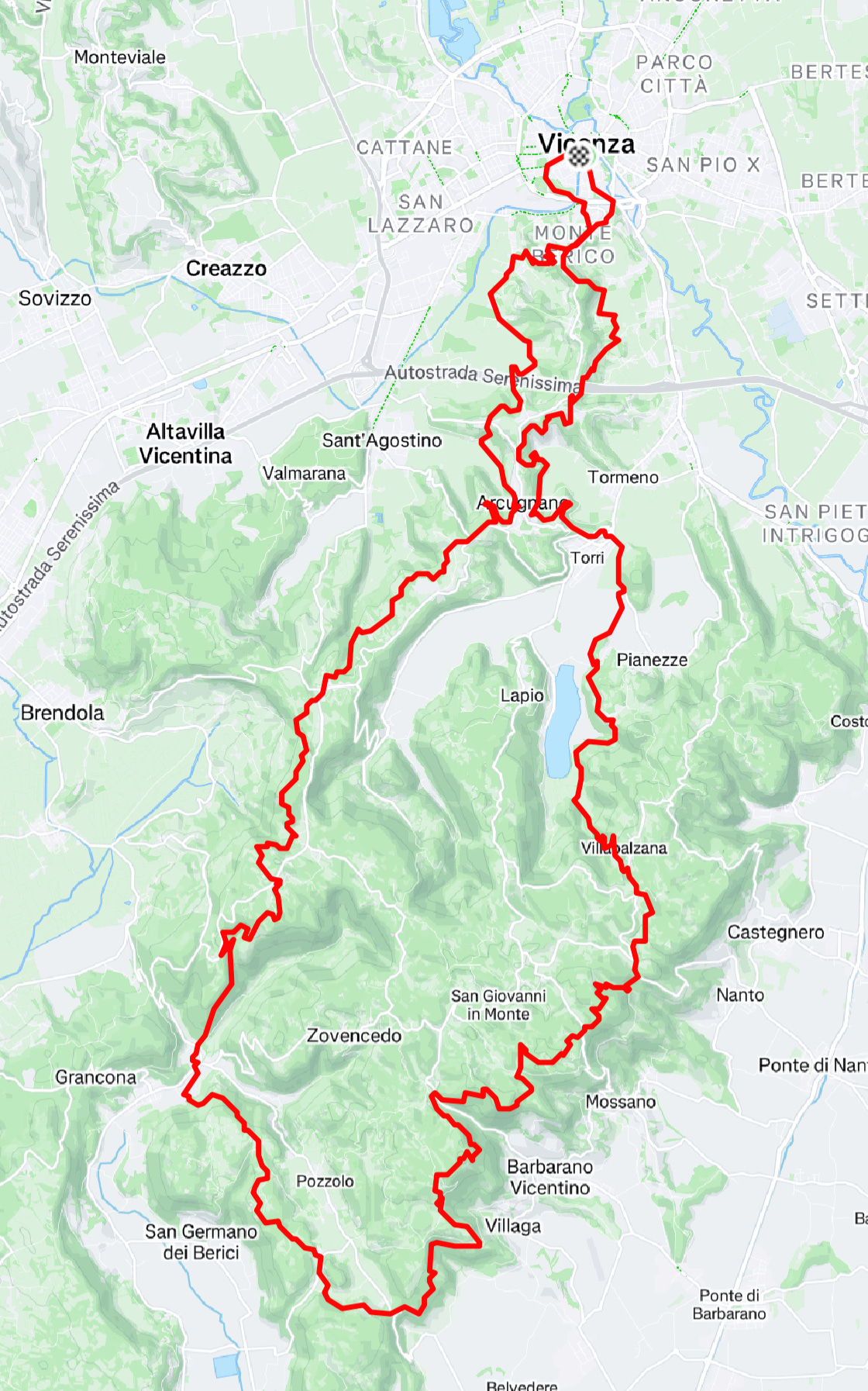
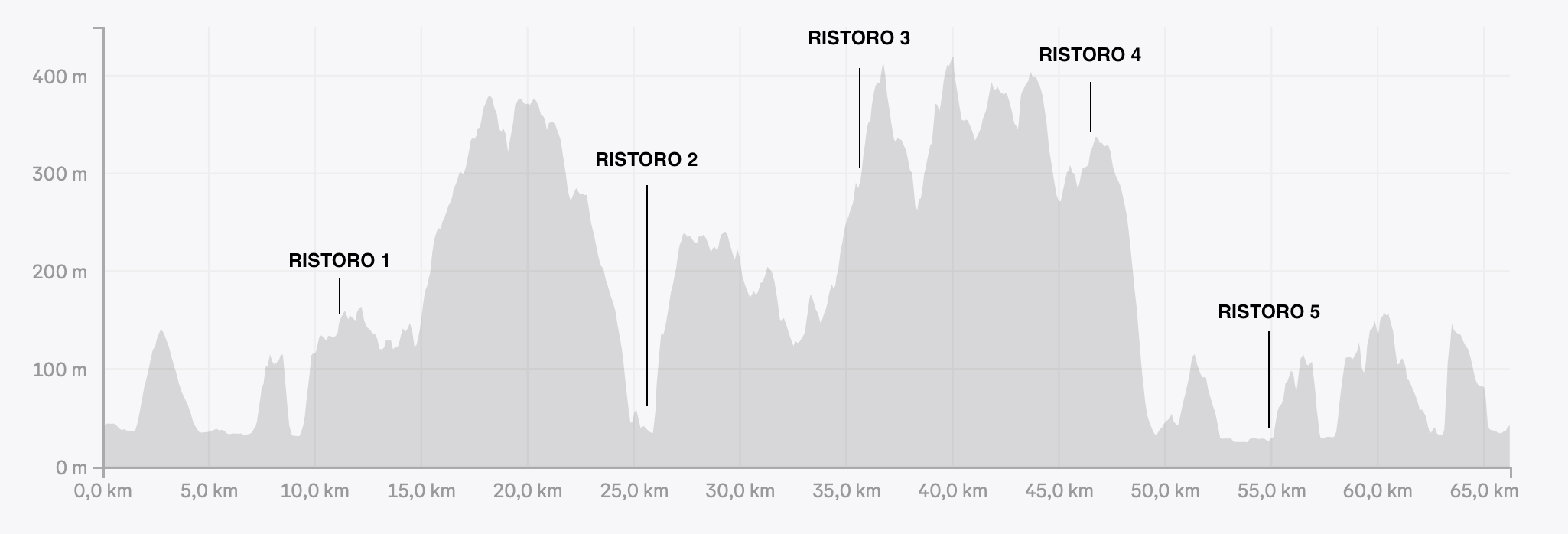
I’d glanced at finish times from past editions, but didn’t put too much weight on them - with all the mud forecasted and no idea of what conditions were like in previous years, it didn’t make sense. Roughly, I figured 6h30 would be a solid day for me; anything I could shave off that mark would be a welcome bonus, but not at the cost of jeopardizing the next training weeks or April’s goal race.
The plan:
100g carbs per hour: 2 soft flasks loaded with 300g of PF Flow gels.
500mg sodium per 0.5L water: 5 PF1000 tabs, dropped into the bottle at every refill.
Goal A: Hold 10-11 km/h, or at least lock into a sustainable yet challenging rhythm.
Goal B: With my estimated time, a top 10 could be in play — but after hearing at the pre-race briefing about 8–10 guys on the line with 800+ ITRA, I scaled it back to aiming for a top 20.
First half of the race: fully self-supported, carrying two flasks, one with gels and one with water.
Second half: Giulia crewed me at the three aid stations, spaced about 10k apart - at the first one she handed me my second gel flask.